 OPEN SCIENCE

1. Introduction
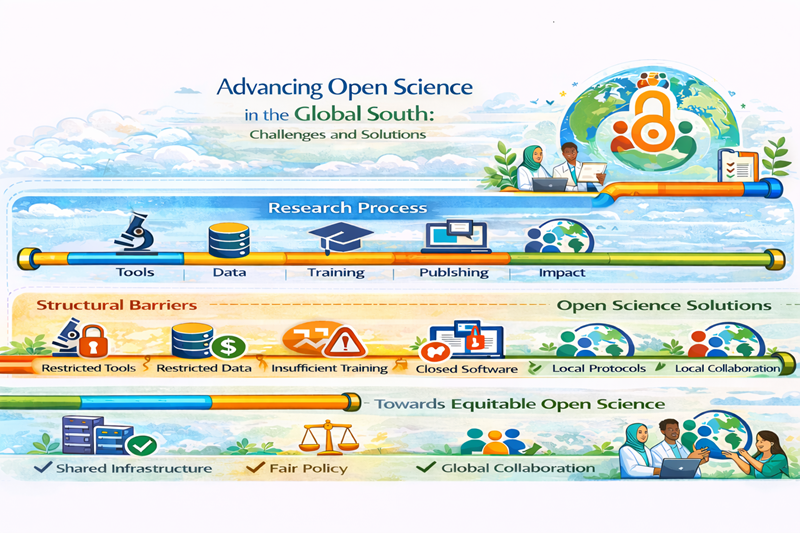
The scientific research process has grown increasingly complex, relying on advanced infrastructure, specialized tools, and interdisciplinary collaboration. While such complexity has enabled important breakthroughs, it has also deepened structural inequalities. Open Science (OS) has emerged as a response to these challenges, promoting accessibility, reproducibility, and inclusivity across all stages of research.
In recent years, notable progress has been made but new challenges have been introduced. For example, the rise of Open Access (OA) publishing has enabled a wider community to remain updated about the latest scientific discoveries, but at the same time the quick rise of large article processing charges (APCs) hinders the participation of the same scientists that were just gained as a new audience of the OA journals (Ross-Hellauer, 2022). The development of Open-Source Software (OSS), the sharing of instrumentation designs, data, protocols and training materials, as well as the formation of global collaborative networks have begun to reshape how scientific knowledge is produced and shared, but institutions have yet to find a proper way to fund and evaluate these contributions.
Equity is a cross-cutting issue that affects every stage of scientific research. From accessing tools and infrastructure to publishing and translating discoveries into societal benefit, persistent inequities, especially between well-resourced and under-resourced regions, continue to shape who can contribute to and benefit from science further widening the economic disparities that could lead to social instabilities globally. To address this, efforts to understand how access challenges uniquely manifest within the research ecosystem are critical(Chuan-Peng et al., 2025).
Access barriers are not uniform but affect, at different levels(Chuan-Peng et al., 2025) all components of the scientific process, experimental tools, computational resources, educational opportunities, and publishing platforms. These gaps deepen existing disparities and must be addressed at multiple levels. Greater attention should be directed toward understanding how access challenges manifest across different domains of research.
Throughout this manuscript, we use the terms “Global South” and “low- and middle-income countries (LMICs)” to discuss inequities in access to research resources. Although these terms often overlap, they emphasize different dimensions. LMICs, as defined by the World Bank based on gross national income per capita, are primarily used in economic and policy analyses. The Global South, by contrast, is a broader socio-political concept that encompasses many LMICs but also includes countries whose scientific systems have been shaped by historical marginalization within global power structures(Khan et al., 2022). The term underscores cultural and structural inequities that extend beyond income levels and remain central to discussions of participation and representation in science.
Scientists in LMICs and other countries with low R&D investment often face compounded barriers across infrastructure, funding, training, data access, and publishing. These challenges are particularly acute in the Global South, where historical and structural imbalances in knowledge production continue to limit full participation in the global research enterprise. Recognizing and addressing these inequities is essential to building a truly global and inclusive scientific community. OS rests on the foundational principles of transparency, reproducibility, and inclusivity. These principles that demand concrete practices at every stage of research. Scientific institutions should therefore embed the dissemination and practical application of these principles as a core component of their operations.
This manuscript explores the recent advancements and persistent barriers along the path from scientific ideation to implementation. Specifically, it examines the role of open hardware, protocols, and software in improving reproducibility and participation, across disciplines in experimental science, while highlighting new disparities arising from unequal access to some of these tools. Beyond technical tools, the paper addresses systemic challenges such as the lack of equitable training opportunities, uneven access to publishing platforms, and limited support for inclusive community-building and collaboration. It argues that while the foundational principles of OS, i.e. transparency, reproducibility, and inclusivity, have gained traction, their practical realization remains limited. Achieving the full potential of OS will require not only technical innovation but also structural reforms, cultural shifts, and policy engagement particularly in how scientific knowledge is translated into public benefit beyond academic institutions.
2. Opening the scientific toolbox: instruments, reagents, software, and data
2.1 Open hardware to expand access
Building on the broader access challenges outlined earlier, a critical bottleneck in global biomedical research is the lack of reliable, modifiable, and affordable experimental hardware. Essential laboratory instruments are often proprietary, expensive, and tailored for centralized markets, limiting local innovation and autonomy. Moreover, when hardware, associated software, reagents, and methods are not openly shared, reproducibility suffers, particularly in under-resourced environments. OS has begun to tackle these structural issues with open hardware(Baden et al., 2015, Pearce, 2012), which democratizes access to experimental instrumentation. In parallel, increasing efforts in open protocols and reagent sharing aim to broaden reproducibility, foster collaboration, and support a more resilient research infrastructure, especially critical in the Global South.
Open hardware is now recognized as an integral part of the OS movement and has been formally incorporated into international frameworks such as UNESCO’s OS Recommendation (UNESCO, 2021, 2023) and policies from the European Commission(Muriillo et al., 2019), EMBL(European Molecular Biology Laboratory, 2021) and CERN(CERN Open Science, 2022). In biomedical research, open laboratory instruments, ranging from pipetting robots to fluorescence microscopes, are being developed to replace or complement proprietary tools. Crucially, these open designs are not only more affordable; they also allow researchers to understand and adapt the systems that produce their data, improving innovation, transparency and reproducibility. In the Global South, where reliance on imported equipment and spare parts can delay or prevent experiments entirely, open hardware offers a potential pathway toward scientific autonomy and long-term sustainability(Wenzel, 2023).
The open hardware landscape is diverse and continues to expand rapidly. Projects vary widely in scope and purpose: some aim to replicate high-end commercial performance at lower cost; others provide affordable tools for teaching and diagnostics; and many focus on modularity and flexibility for research-specific needs. In bioimaging alone, open microscopy platforms span from smartphone-based fluorescence setups to modular light-sheet systems designed for tissue clearing or high-speed 3D imaging(Hohlbein et al., 2022). However, many open designs especially those developed in well-resourced settings still depend on region-specific supply chains, niche components, or tacit assembly knowledge. This can limit their applicability in other contexts, especially where local supply chains and technical capacity differ. To overcome these barriers and make open hardware truly globally accessible, attention must be paid to five key dimensions(Wenzel, 2023)
1. Local fabrication suitability, ensuring that components can be produced or sourced with tools and materials available in most regions.
2. Adaptability of the design, allowing modification to fit different research needs and constraints.
3. Suitability for life science users to build and adapt the design, including clear, usable documentation and pathways for contributing improvements.
4. Availability of modifiable open-source design files, such as CAD models or firmware.
5. Affordability of components, minimizing reliance on high-cost or proprietary parts.
Digital fabrication technologies, particularly desktop 3D printing and laser cutting, play a central role in enabling these dimensions. These tools support rapid, distributed manufacturing, allowing researchers to reproduce parts locally and share updates or improvements digitally, much like software. When open designs are optimized for digital fabrication, they enable faster iteration, local repair, and user-driven innovation. This digital foundation supports a shift from passive use to active participation, fostering scientific agency in regions where traditional access to cutting-edge equipment is limited. If embedded in supportive communities and platforms, these practices can contribute to a broader decolonization of laboratory infrastructure, reducing dependence on fragile supply chains and centralized development models.
2.2 Open protocols and reagents to improve reproducibility
Yet instrumentation is only one part of experimental reproducibility. Reagents, protocols, and procedural standards are equally important, but here, as well, openness remains unevenly distributed. While global platforms like protocols.io and Addgene have facilitated broader access to methods and materials, the dominant flow of shared protocols and biological parts remains North-to-South. Scientists in the Global South are underrepresented(Demeter, 2020; Goolab & Scholefield, 2024; Wenzel, 2023) in these spaces, even though they often engage in highly creative adaptations(Coloma & Harris, 2004,Wenzel, 2023) to stretch limited resources or substitute hard-to-access reagents. These adaptations, born from necessity, could benefit researchers elsewhere, especially in times of supply disruption or cost constraints. But institutional and publishing norms rarely prioritize the sharing of such “non-standard” methods.
To address this, a growing number of initiatives are working to enable open and equitable protocol and reagent sharing. The Reclone network(Reclone.org, 2020), for example, promotes local reagent production, including enzymes, buffers, and molecular biology kits, and supports open documentation and knowledge exchange. With recent support from the Chan Zuckerberg Initiative, Reclone is fast-tracking its Latin American chapter, advancing regionally coordinated efforts to build bioeconomy infrastructure through shared protocols and community labs. In parallel, the adoption of Open Material Transfer Agreements (Open MTAs)(Kahl et al., 2018) provides a legal mechanism for sharing biological materials without restrictive licensing terms. These approaches not only facilitate collaboration but also strengthen the local production and adaptation of reagents, complementing open hardware and contributing to a more resilient and equitable research ecosystem.
Crucially, the interplay between open hardware and open protocols creates a powerful feedback loop. Hardware is only as useful as the procedures it supports, and protocols are only reproducible if researchers understand and can access the equipment and reagents required. In many cases, both need to be adapted together to suit local infrastructure. For example, an open-source PCR machine might be paired with locally made reagents and an adjusted thermal cycling protocol to fit a particular power supply or sample type. Sharing these context-specific adaptations, not just the “ideal case” protocol, is essential for global reproducibility and relevance.
Efforts like LIBRE hub (the Latin American hub for open bioimaging hardware)(LibreHUB, 2025), Reclone, and various open communities demonstrate the potential of regionally grounded, globally connected OS ecosystems. In a similar vein, the MicroSudAqua (µSudAqua) network in limnology and aquatic microbial ecology consolidates a collaborative space for sharing protocols, databases, computational scripts, and publications to promote the field in Latin America(µSudAqua, 2017). These networks foster peer support, reduce redundancy, and create opportunities for South-South collaboration, an aspect still underdeveloped in most international OS initiatives. They also support the broader goals of OS not just as access to publications or tools, but as a means of participation, agency, and knowledge co-creation.
2.3 Open software to foster transparency
As part of the broader scientific infrastructure, software is integral to research; whether in automating experiments, analysing large datasets, or visualizing results. Yet much of the software used in academic labs remains proprietary, expensive, closed-source, and often inflexible, reinforcing access barriers and limiting reproducibility. A recent example highlighting the tension between innovation and openness is the release of AlphaFold3 by DeepMind and Isomorphic Labs(Abramson et al., 2024). While the model represents a major advance in predicting biomolecular interactions, its initial lack of Open Source Code and limited access drew widespread criticism, including a protest letter signed by over 1,000 scientists(Nature Ed., 2024,Wankowicz et al., 2024). This situation illustrates a central challenge for OS: scientific tools cannot be reviewed, validated, or built upon if they cannot be inspected. Code availability is not merely a principle, it is a prerequisite for reproducibility, peer review, and collective progress. OSS offers a fundamentally different model: tools that are transparent, modifiable, and freely available, created and sustained by distributed communities of scientists, educators, and developers.
Open software allows researchers to inspect and understand every step of their computational process. In doing so, it supports reproducibility, a core scientific value that is difficult to uphold when software functions as a black box. By sharing the code behind analyses, OSS allows others to replicate, audit, and build on published results. This is essential as scientific workflows become more complex and computationally intensive.
Dissemination of scientific software and recognition to the authors is key. The Journal of Open-Source Software (JOSS) plays a key role in giving open-source projects formal academic visibility. JOSS reviews and publishes short descriptions of research software, assigning DOIs and ensuring proper documentation and testing. It helps legitimize software as a scholarly product, allowing developers to receive academic credit. Projects across domains such as RNA-seq pipelines, particle tracking tools, or control systems for lab instruments can now be published, cited, and evaluated as part of a scientist’s academic portfolio(JOSS, n.d.; Smith et al., 2018). Open-source tools also help address global inequities in access to scientific infrastructure. Many labs especially in the Global South struggle to afford licenses for commercial platforms used in data analysis, simulation, or image processing. OSS removes this barrier. For example, in bioinformatics, open tools like Bioconductor(Huber et al., 2015) and the Galaxy platform(Abueg et al., 2024) allow researchers to process high-throughput sequencing data without needing commercial software. These platforms are actively maintained by international communities that produce tutorials, host workshops, and support newcomers therefore enabling more equitable participation in genomics research.
The same is true in image analysis, where tools like ImageJ/Fiji(Schindelin et al., 2012; Schneider et al., 2012) or Napari(Sofroniew et al., 2025) offer powerful features for microscopy data interpretation. While developed in well-funded institutions, these platforms have grown thanks to user communities that extend their functionality through plugins, share annotated datasets, and write guides in multiple languages. The open model not only enables customization for specific scientific problems but fosters innovation from contexts with different constraints or priorities.
In instrumentation, open software plays a key role in enabling researchers to control and automate laboratory equipment. Tools such as PyVISA(Grecco et al., 2023) allow users to interact with instruments over standard interfaces, enabling automation of measurements and experimental routines. Beyond immediate functionality, open software in instrumentation is essential for building sustainable workflows and avoiding vendor lock-in. Open standards and interoperable codebases empower laboratories to maintain long-term access to their instrumentation infrastructure, adapt tools to specific needs, and share reproducible methods across research groups.
The educational benefits of open software are equally significant. Tools like Jupyter Notebooks(Kluyver et al., 2016) make it possible to combine code, narrative text, and output in a single, shareable file. In classroom and workshop settings, this makes scientific computing transparent and interactive. Learners can step through a pipeline, modify parameters, and visualize the impact in real time. At the institutional level, the widespread adoption of open tools also helps address the economic burden of software licensing, which can be substantial even for well-funded universities managing hundreds of courses and thousands of users.
The success of these and other areas of open-source development of scientific software lies not only in technical excellence but in shared values: transparency, inclusion, and adaptability. Projects that thrive often feature open governance, accessible contribution processes, and public roadmaps. They welcome newcomers and maintain channels such as forums, mailing lists, Slack groups for peer-to-peer support. These cultural practices enable collective learning and resilience, particularly when navigating challenges like software deprecation, hardware changes, or evolving scientific needs.
Nevertheless, challenges remain. Many researchers are trained in proprietary environments and may be hesitant to adopt new tools. Transitioning to OSS often requires institutional support, including infrastructure, incentives, and professional recognition. Moreover, many open software projects rely on unpaid labour from academics whose contributions are not always rewarded under current funding and evaluation systems.
It is worth noting that ImageJ(Schneider et al., 2012), one of the most widely used open-source tools in the life sciences, was originally developed at the U.S. National Institutes of Health (NIH) in the late 1990s. With visionary leadership and sustained NIH funding, ImageJ grew into a robust, extensible platform that continues to support countless scientific workflows. This example underscores how public investment, combined with open development, can produce tools that are not only widely adopted but also adaptable to evolving research needs. Encouragingly, more funding organizations are beginning to recognize software as a research output worth supporting. The Chan Zuckerberg Initiative, Sloan Foundation, and others now fund software sustainability efforts, including maintenance, developer salaries, and community coordination. These shifts are helping to ensure that vital open tools remain available and usable long-term.
Ultimately, open software is not just about writing code: it’s about creating shared infrastructure for doing science differently. It enables a research ecosystem where tools can be inspected, verified, adapted, and redistributed. It lowers barriers to entry, enhances reproducibility, and empowers researchers to contribute not just findings, but methods. Whether managing a microscopy workflow in a remote lab, processing sequencing data on a shared server, or automating a spectroscopy experiment, OSS makes science more transparent, inclusive, and resilient.
2.4 Confronting challenges of scale, access, and equity in data analysis
The growing scale of data analysis and machine learning presents new access challenges specific to computational resources. High-performance computing infrastructure remains prohibitively expensive for many institutions, reinforcing existing disparities. While open datasets improve reproducibility, they also raise concerns about ethical data use, privacy, and the technical limitations of sharing large files(Bezuidenhout et al., 2017). Emerging solutions, such as cloud-based platforms and the adoption of FAIR (Findable, Accessible, Interoperable, and Reusable) data principles(Wilkinson et al., 2016, 2019), offer partial relief but also introduce new dependencies and require sustained institutional investment. Furthermore, the adoption of artificial intelligence technologies exhibits a pronounced lack of uniformity across the globe, with low-income countries (LICs) lagging considerably behind their higher-income counterparts. The ongoing geopolitical and geographic concentration of AI expertise and essential infrastructure serves to amplify this existing imbalance, underscoring the urgent imperative for robust multilateral cooperation. To effectively confront these intricate challenges, a concerted global strategy is indispensable to bridge the technological divide, ensuring that all nations and institutions can equitably participate in and derive benefits from the advancements in data analysis and artificial intelligence. This entails increased investment in infrastructure development and capacity building within LICs, the promotion of open, ethical, and responsible data-sharing practices, and the exploration of innovative collaborative frameworks to foster a more equitable landscape for the global development and application of data analysis especially in AI. The current AI race is increasingly impacted by industry research (rather academia) and dominated by US tech giants and China's national strategy, threatens to exacerbate global inequality. While US AI investment reached \$67 billion in 2024 (Stanford AI Index)(O’Brien, 2024) and China's "New Generation AI Development Plan"(SCPRC, 2019) commits \$150 billion through 2030, Global South nations collectively account for less than 5% of global AI R&D expenditure. Addressing the multifaceted challenges of scale, access, and equity in the realm of data analysis necessitates a comprehensive and collaborative global effort.
3. Strengthening OS: training, collaboration, and community building
3.1 Training in OS principles and practices
The principles of transparency, collaboration, reproducibility, and accessibility are fundamental to OS. Embedding these values into everyday research practice requires targeted training and education. The topic of education is included in the UNESCO recommendations(UNESCO, 2021) of investing in human resources, training, education, digital literacy and capacity building for OS; promoting innovative approaches for OS at different stages of the scientific process; and fostering a culture of OS and aligning incentives for OS.
Although open access, open data, and interdisciplinary collaboration are gaining momentum, significant gaps persist in how scientists are trained to apply OS practices effectively. OS also promotes improved communication and integrity practices that enable data reuse and reproducibility. Recent work highlights persistent barriers to implementing FAIR practices(Costa, 2024). These include incomplete reporting, missing or inadequate metadata, limited access to open data repositories, a lack of trust in data reuse, fear of being ‘scooped,’ and publication biases that prioritize novel datasets over reused ones. Many of these barriers are deeply rooted in how science is taught and practiced. To shift the current landscape, it is essential to embed OS principles in education and provide targeted training on how to apply them effectively. Examples of regional programs addressing this educational need and their area of focus, are summarized in Supplementary Table 1. Current efforts can be divided into seven main categories:
1. What OS is and theoretical principles on how to implement it.
2. How to use, adapt and create open hardware, and best documentation practices.
3. How to use, adapt and create open software, and best documentation practices.
4. Strategies for scientific planning, data acquisition, metadata use, data management and data reporting to ensure openness, usability and reproducibility in science.
5. Training workshops on how to use, adapt and create infrastructure that fosters interactive computing, that transcends geographical barriers to collaboration.
6. Training on strategies for OS communication to bridge scientific communities and the general public.
7. Training on strategies to change policy to promote open publishing models that ensure transparency, reproducibility and accessibility.
While courses, workshops, guidelines and virtual training formats exist for all seven categories, adoption of OS philosophy, implementation, and training in mainstream scientific education is still inconsistent. Several factors have been identified across disciplines, as being behind this inconsistent adoption. In their recent paper, van der Zee and colleagues32 discuss (a) that the norms of education research and publishing still follow norms that guided scientific dissemination in times when information relied on printed paper. With digital technologies, the costs of sharing information have dramatically decreased but sharing practices have lagged; (b) training of the young academics is still guided by challenges associated with norms and incentives of scientific publishing including lack of reproducibility, publication bias, high rates of false positives, and cost barriers for accessing scientific knowledge(Suber, 2004; Van Noorden, 2013). A more efficient adaptation to the benefits of the digital era could bring about positive changes for accessibility to knowledge.
Sadler and Mensah(Sadler & Mensah, 2020) and Kessler and colleagues(Kessler et al., 2021) discuss an interesting viewpoint in the context of challenges for OS, including the need for a clearer definition of what this concept is, and what its component parts are. Notably, the importance of defining OS as a concept is also highlighted within the UNESCO recommendations for OS(UNESCO, 2021). Sadler and Mensah, and Kessler et al explore this in the context of an engaging title: ‘Open for whom?’. In their work, they evaluate how practices of OS as applied to researchers of specific disciplines do not always expand to other fields, or, specifically, the science education community. Examples highlighted include the value and need of creating and sharing curricular materials and associated tools. Altogether, the authors conclude that asking what counts as OS, and defining whom it benefits, are vital steps toward achieving its intended value. While OS training emphasizes principles, tools, and practices to foster transparency and collaboration, it is distinct from technical or experimental skills training, which we address separately in the context of STEM education.
3.2 Addressing funding inequities in OS training
Additional to the inconsistent implementation of OS practices in scientific education is the uneven (or sometimes entirely absent) funding for creating workshops and similar opportunities for knowledge exchange. This varies widely between countries and scientific disciplines. For instance, in the Global-North, various initiatives exist to promote equal access to open education in science, which are funded by public, regional, national, or federal funding, as well as private organizations. In areas where these resources are more limited, or their distribution highly tied to quickly changing socio-political interests, access is uneven. These accumulating disparities significantly hinder the development of necessary skills and expertise. In terms of global efforts, over the last decade, there has been an increase in the number of academic institutions as well as private organizations whose mission is to generate programs that foster OS and international collaboration. Notable examples include The World Academy of Sciences (TWAS) (see below), the Chan Zuckerberg Initiative (CZI), the Alfred P. Sloan Foundation, and the Wellcome Trust, all of which maintain dedicated programs supporting open research infrastructure, software, and community training initiatives. This has resulted in the direct funding of standalone projects, and collaborative networks that facilitate and fund OS, including education on OS. From our perspective, these efforts have been vital, not only because of their direct effects on the adoption of OS, but also because these organizations have demonstrated to other funding bodies, both public and private, the importance, value, and impact of investing in this vision.
3.3 Fostering equity through global OS collaboration
Global collaboration goes hand in hand with OS. Nevertheless, collaboration is hindered by differences in access to infrastructure and financial resources, which promotes power imbalances. This resonates across the full scientific workflow, from the type of research questions that are proposed, to the journals in which such research can be published (some of which are extremely costly or require large sums of money to make the papers open access). Recent data from the Nature Index 2023 North-South Collaboration supplement reveal that genuine global research equity remains distant, with only 2.7% of articles published between 2015 and 2022 involving collaborations between high- and low-income countries, and even within those, authors from wealthy nations outnumbering their lower-income counterparts three to one—a stark reminder that meaningful reform in funding, authorship, and publishing practices is urgently needed to balance the global research landscape(Nature Ed., 2023).
Unfortunately, this can lead to the bias of assuming that some science is better than others, and in the long run impacts eligibility to funding, making it a vicious cycle. Equality in access to resources and expertise can be addressed by OS, and people investing in these efforts have had a major impact on the local, national and regional capacities. Examples of these efforts are bioimaging communities such as Latin America Bioimaging (LABI), iSEA (imaging Southeast Asia) and the Africa Bioimaging Consortium (ABIC), which have promoted capacity-building and reinforce the establishment and maintenance of local expertise. International OS collaborations contribute to equality among the scientific community by facilitating exchange of experience. OS also has the potential of promoting the retention of talent, and reversing or avoiding the ‘brain drain’ effect.
3.4 Breaking language barriers for global OS
An important consideration for global collaborations and OS is linguistic accessibility. The predominant language in which science is communicated has changed several times throughout history. While historically the adoption of a common language might have helped unite the scientific community (composed by a selected few), in modern societies this is no longer the case. The fundamental idea of OS is for scientific knowledge to not be restricted to a selected few. To ensure universal access, the language barrier needs to be overcome. Regarding disseminating science to the general public, operating under the assumption that everyone speaks English is incorrect, and modern democratization efforts should include generating teaching material, documentation, software and other resources in multiple languages. This view is strongly supported by UNESCO’s Recommendation on OS, which emphasizes that multilingualism is essential for equity, inclusion, and the full participation of all researchers and societal actors in the scientific process.
In addition, a recent article by Amano and colleagues(Amano et al., 2023) evaluated the disadvantages and costs of being a non-native English speaker in science(Amano et al., 2021, 2023). These include the need for more time to acquire knowledge (often only available in English); more time to write a paper; more effort to proofread a paper; a higher likelihood of language-related paper rejection and higher difficulties associated with attending, actively participating and presenting their research progress in scientific conferences. Some steps towards addressing this barrier have been taken using artificial intelligence for translation and interpretation, to ensure that resources available in any language become available for everyone. We firmly believe that language equity should be fundamental in future efforts for OS.
3.5 Empowering civic science for broader participation
Global collaboration and language equity both foster and facilitate one more important aspect of OS: citizen science. The fundamental concept of this is collaborating with members of the public to advance scientific research through the collection and analysis of data. Several initiatives exist in this respect, incorporating interdisciplinary skills such as videogaming, photography and coding. Examples include Zooniverse, iNaturalist, and BudBurst, as well as programs led by specialized organizations such as National Geographic. Civic science has led to beneficial collaborations in disciplines such as conservation biology and epidemiology, but its adoption remains patchy. Promoting this interaction will not only impactfully contribute to advancing and accelerating science, but also to bridging important gaps between the scientific community and the general public.
4 Building a global agenda for hands-on STEM training
4.1 Strengthening STEM education through practical training
Beyond training in OS principles and practices, strong foundations in technical and experimental skills through STEM education remain critical for addressing global challenges and ensuring sustainable development in a world with finite resources(Cabrerizo, 2023; Mudaly & Chirikure, 2023). However, the lack of comprehensive STEM agendas, coupled with socio-economic constraints in the Global South, hinders the formulation, adoption, and implementation of effective policies. Although some developing countries provide high-quality STEM education, their curricula often emphasize theoretical knowledge over practical experience. This lack of hands-on training impairs students’ ability to conduct impactful scientific research, limiting their capacity to address local challenges and contribute to national and regional progress.
The necessity(Howard, 2024; Tanaka et al., 2023; Willshaw, 2008), benefits, and impact(Cabrerizo, 2023; Chen et al., 2019; Tuzun, 2020; United Nations, 2019) of hands-on learning have been widely documented. As with OS training, hands-on practical experience is crucial in STEM education. Practical training equips students with essential skills such as experimental methodologies, equipment operation, troubleshooting, and research planning foundations necessary for scientific innovation and technological advancement. Its absence exacerbates educational inequalities, widening the gap between developed and developing nations in scientific innovation and technological advancement. Addressing this issue requires global efforts to integrate hands-on training into STEM curricula, particularly in under-resourced regions.
Several international organizations are actively working to enhance STEM education through practical training initiatives. Notably, The World Academy of Sciences (TWAS), a UNESCO programme unit based in Trieste, and the TWAS Young Affiliates Network (TYAN), comprising over 400 young scientists from more than 85 developing countries(TYAN, 2016), play crucial roles in fostering collaboration, mentorship, and scientific capacity-building in the Global South. Since its establishment in 2016, TYAN has launched multiple initiatives aimed at reducing the North-South scientific gap, including the TYAN International Thematic Workshop (TITO) and the TYAN Educational & Research for Sustainable Development (TEACH-4-SD) programs. These initiatives represent good examples promoting interdisciplinary collaboration and providing practical training courses through workshops and hands-on schools(TYAN, 2023; TYAN, 2024; Vargas et al., 2020).
Hands-on training serves as a vital tool for strengthening scientific expertise and boosting South-South and South-North collaborations(TWAS, 2016). While conferences and scientific meetings are essential for dissemination of knowledge, they often neglect practical or experimental activities. Recent TYAN hands-on training programs have provided instruction in diverse STEM fields, including photochemistry, photobiology, spectroscopy, microscopy, developmental biology, genetics, and food chemistry(TYAN, 2023,TYAN, 2024). These programs have successfully engaged over 350 trainees, with expert instructors from Argentina, Bolivia, Brazil, Chile, Ecuador, Costa Rica and Norway sharing techniques and knowledge acquired from leading international institutions. These kinds of initiatives are also favourable to introduce and promote the "train-the-trainers" model. Outstanding students from previous workshops are invited to serve as instructors alongside experienced TYAN members, fostering knowledge transfer and capacity-building(TYAN, 2023). This approach not only enhances participants’ scientific skills but also empowers them to become educators, expanding the impact of the program across their home institutions and countries.
One of the key strengths of these hands-on initiatives is their accessibility. The training programs are designed to be implemented with basic, low-cost,(Madriz et al., 2021) and widely available laboratory materials, making them feasible for institutions with limited resources. This adaptability allows the practical modules to be integrated into conference sessions, workshops, or university curricula, broadening their reach and sustainability. By participating in these hands-on activities, STEM students develop crucial competencies in experimental design, data analysis, critical thinking, and problem-solving. These skills that are indispensable for scientific innovation and technological progress.
4.2 Expanding access and building sustainable training programs
While significant progress has been made in promoting hands-on STEM education, further efforts and multilateral investments are needed to expand these initiatives and institutionalize open practical training as a fundamental component of STEM curricula worldwide. Strengthening partnerships between academia, industry, and international organizations can facilitate knowledge exchange, provide open access to better resources, and create more opportunities for students and researchers in underprivileged regions. By prioritizing hands-on learning, we can cultivate a new generation of scientists capable of addressing global challenges through innovative research and sustainable solutions.
5. Publishing inequities: access, costs, and the future of OS
5.1 Financial and structural barriers in open-access publishing
Building on broader efforts in OS, the shift to open-access (OA) publishing models has transformed the dissemination of scientific knowledge. While OA initiatives have expanded readership and reuse, financial barriers particularly, article processing charges (APCs), persist and disproportionately affect researchers from LMICs. The dominant APC-based model exacerbates global inequities by placing a financial burden on researchers without institutional support, limiting their participation in high-impact scientific debates.
A prevalent OA publishing model, often referred to as “Gold OA”, requires researchers to cover APCs to ensure their work is freely accessible. While this model expands access to scientific literature, it has a negative impact on scientists in LMICs(Ross-Hellauer, 2022). APCs can range from several hundred to thousands of dollars per article(Abdel-Razig et al., 2024; Vervoort et al., 2021).
Although some journals offer APC waivers or discounts for researchers from low-income countries (LICs), these policies often exclude middle-income countries (MICs) representing a significant portion of the global research community. Moreover, waiver application processes are often opaque, inconsistently applied, or rejected due to limited publisher funds.
The shift toward APC-based OA has deepened global scientific inequalities, creating a publishing hierarchy that favours well-funded researchers from the Global-North. While commercial publishers profit from the OA movement, researchers from resource-limited institutions (primarily in the Global-South) struggle to participate in the global knowledge dialogue. In many cases, the cost of a single APC exceeds an entire research grant, placing immense financial pressure on scientists in regions such as Latin America, Africa, and parts of Asia. Thus, countries with emerging research ecosystems face systemic exclusion from high impact publishing platforms, limiting both their scientific visibility and their ability to contribute to global advances.
Moreover, the APC-based OA model threatens the sustainability of local and regional journals operating under non-commercial or subsidized frameworks. Many journals from the Global South follow the “Diamond OA” model, which does not charge authors or readers but relies on institutional or government funding instead. The rise of commercial APC-driven publishing pressures these journals to either adopt unsustainable pricing models or risk losing visibility in international databases.
5.2 Towards fairer publishing models and research evaluation
Alternative publishing models, such as preprints and post-publication peer review, offer promising pathways to enhance access to scientific literature while upholding rigorous academic standards. Platforms like arXiv, bioRxiv, SciELO, RedALyC and PubScholar provide early access to research findings without financial barriers. Although preprints lack formal peer review, post-publication review mechanisms can complement them to uphold quality and credibility. However, these alternatives are not yet widely accepted, and their adoption must be strengthened and expanded to counteract the dominance of commercial publishers. To be globally competitive and sustainable, these open platforms require consistent funding and institutional support.
As discussed in previous section, language barriers pose a significant obstacle to inclusive participation in science. These challenges are particularly acute in scientific publishing, where English remains the dominant language of communication. Researchers from non-English-speaking regions often face additional costs for translation and editing services, along with higher rejection rates stemming from language-related issues rather than scientific merit. These barriers not only increase the cost of publication but also limit the diversity of perspectives in global scientific discourse thereby undermining the inclusivity that open-access publishing seeks to promote.
Career advancement remains closely tied to journal prestige, reinforcing traditional publishing models. The persistence of journal-based metrics, such as the Journal Impact Factor, continues to drive researchers toward high-cost journals to advance their careers. Initiatives such as the San Francisco Declaration on Research Assessment (DORA) advocate for fairer research evaluation strategies that prioritize the quality and societal impact of research over journal prestige. Universities and funding agencies should adopt alternative metrics, such as open citations, usage statistics, and societal relevance indicators, to reduce reliance on expensive high-impact journals. Some alternative metrics aimed at measuring research impact beyond citations and with global-local perspectives are already in development(Yang & Huang, 2025), although they are not yet universally recognized.
Recognizing the urgency of equitable OA solutions stated by UNESCO, TYAN, in collaboration with over 35 international institutions and organizations, initiated a global call for fair OA models. This initiative, endorsed by 17 Nobel laureates, emphasizes the need for inclusive publishing frameworks that do not exclude researchers based on financial constraints(Cabrerizo, 2022). While significant challenges remain, progress is underway, with OS journal exemplifying a shift toward more accessible and equitable scientific publishing.
To ensure truly open and inclusive scientific communication, the academic community must advocate for systemic reforms in publishing policies. Expanding Diamond OA models, supporting alternative peer review mechanisms, and adopting fairer research evaluation metrics will be essential to mitigating disparities and fostering global scientific collaboration. The OS movement must not only make research freely available but also remove financial and structural barriers that limit the participation of underrepresented scientists.
6. From lab to society: translating research into impact
Scientific discoveries drive progress across healthcare, industry, and policy. Building on the broader themes of OS, effective translation from research to practice requires strong regulatory frameworks, sustainable infrastructure, and equitable funding mechanisms. Public-private partnerships can accelerate translation, but ethical concerns and public trust remain critical to adoption. Ultimately, scientific progress must be measured not only by discovery, but by real-world societal change.
In this context, OS is defined as the inclusive, transparent, and collaborative production and dissemination of scientific knowledge, with the explicit aim of maximising its accessibility, reproducibility, and societal impact(UNESCO, 2021). Translation which refers to the process of transforming research outputs into policies, practices, and products is increasingly recognised as an important aspect of OS, particularly when driven by principles of collective benefit, equity, and inclusive participation.
However, the process of translating scientific research into practical applications presents unique challenges, especially in LMICs(Young, 2005). Taking biomedical research as an example, the gap between the generation of knowledge and its application in public health policies and practices remains substantial. This gap underscores the critical need for effective knowledge translation (KT) strategies that address local contextual factors while also leveraging the global research landscape. This is particularly important in LMICs, where research resources are scarce and funding is prioritized for translational research that can demonstrate societal impact and justify future investments from funding agencies(Hennink & Stephenson, 2005). This section explores these challenges and solutions in bridging the gap between lab and society.
6.1 Bridging the first valley: from discovery to application
Translating research into practical applications faces two major hurdles, often called the “valleys of death.” The first occurs between a basic scientific discovery and the development of a tangible, testable application. This gap reflects the significant investment needed to transform fundamental insights into usable products. For example, demonstrating that an artificial intelligence algorithm can accurately diagnose a disease requires building a minimum viable device capable of supporting clinical trials or implementation studies. Similarly, moving a drug that kills cancer cells in the laboratory into the clinic demands extensive preclinical work and the successful navigation of multiple clinical trial phases.
Beyond funding, the first valley of death also exposes gaps in infrastructure, technical expertise, and regulatory capacity. These are critical ingredients for advancing research into viable health interventions(Ayah et al., 2014). Preclinical studies and clinical trial designs must comply with both local and international regulations, requiring early engagement with stakeholders such as national pharmaceutical authorities. Yet many LMICs still rely heavily on guidance from global bodies like the U.S. Food and Drug Administration (FDA), reflecting limited local regulatory capacity. Additional barriers include the scarcity of accredited facilities and limited expertise in conducting preclinical and clinical studies. These gaps delay the development of health solutions and weaken the ability to implement innovations at scale.
Bridging the gaps in infrastructure, expertise, and funding requires a comprehensive strategy centred on local capacity building and global partnerships. Strengthening local research facilities, expanding funding mechanisms, and fostering international collaborations can collectively provide the expertise and resources needed. Here, OS mechanisms such as open-source research tools, data repositories and transparent study protocols serve to accelerate this process by reducing duplication and enabling wider access to knowledge inputs(Shu & McCauley, 2017). These practices lower entry barriers for LMICs researchers and innovators to co-develop or localise applications contributing directly to downstream translation. OS also encourages greater collaboration across sectors which can foster innovation. Official Development Assistance (ODA), funding from high-income countries (HICs) aimed at promoting economic growth in developing nations, remains crucial. For example, the UK’s Foreign, Commonwealth & Development Office (FCDO) funds global health research initiatives such as vaccine development, health policy advancement, and local capacity building(UUK-BLOG, 2025). Similarly, Canada’s International Development Research Centre (IDRC) supports research and innovation across the Global-South, with the value of such aid clearly demonstrated during recent disease outbreak responses(IDRC-CRDI, 2025). Importantly, international support not only provides direct funding but also incentivizes public and private investment within LMICs, fostering a more sustainable environment for health innovation. These efforts are increasingly critical given recent global cutbacks in development aid(ICAI, 2025).
Beyond donor-driven models, alternative models such as open innovation (utilizing external and internal ideas, data and resources) and socially responsible licensing, support responsible commercialization while maintaining equity, these concepts are well grounded on the values of collective benefit in the principles of OS. Such approaches have been used to access critical drugs for infectious diseases underscoring that these models can work.
6.2 Crossing the second valley: embedding research into policy and practice
To effectively address public health challenges, research findings must be translated into policy actions that are contextually relevant and supported by empirical evidence. The second valley of death involves the integration of scientific advancements into practice and policy. This phase is hindered by the availability of infrastructure and know-how that is required for successful applications to be used in practice. This includes regulatory and health systems policies. For example, whilst there is increasing need for integration of telehealth and artificial intelligence in clinical practice globally, all but one South-East Asian country does not have AI-specific requirements guidelines for medical devices, making the development and application of AI-driven products challenging in these countries(Health Science Authority Sg, 2022). The complexity of political and socio-economic factors, alongside institutional resistance to change, further complicates the adoption of innovations. This is often compounded by inadequate communication between researchers and policymakers such as poor engagement during technology development, failure to address contextual barriers, and insufficient discussion on financial and infrastructural needs required for adoption.
Strict adherence to local or/and global regulatory standards is essential for translating scientific applications into clinical practice. To reap the full benefits of research, countries must develop regulatory and approval frameworks in parallel with scientific innovation. With strong political will and adequate funding, this is achievable as demonstrated by the successful establishment of early-phase clinical trials units in several LMICs. These developments not only advance research translation but also attract investment by offering credible, competitively priced trial environments. Moreover, they create fertile ground for building local scientific capacity, fostering sustainability and innovation(Voon et al., 2023).
Strategic engagement between researchers and policymakers, alongside capacity building, is critical to navigating the second valley of death. This requires institutional support and initiatives both from the researchers and policy makers(Hawkes et al., 2016; Orem et al., 2014). Such collaboration is central to the OS framework, which promotes co-creation of knowledge and sustained engagement between scientists, policymakers, and communities to ensure research is relevant, responsive, and embedded in real-world systems. The establishment of policy dialogues where areas of need are clearly communicated could serve as a platform to shape research areas that are relevant to the nation and to share significant findings that could impact real world application and policy. Often, scientific discoveries that win awards or those which receive media attention are noticed by policy makers. Therefore, researchers should leverage on such platforms to create awareness. In this regard, the appropriate packaging of research results such as writing policy briefs and science communication is gaining prominence(Adam et al., 2014) and should be incorporated in the training of science graduates. Similarly, training for policy makers to understand scientific outputs and requirements to advance these to clinical application would significantly enhance the development of policies that are informed by research evidence. This requires sustained communication and collaboration between researchers and policymakers(Oliver et al., 2014; Yimgang et al., 2021; Young et al., 2018). Science diplomacy courses organized by the World Academy of Science (TWAS) and the American Association for the Advancement of Science (AAAS) annually facilitate the connection between researchers and policy makers(TWAS, 2024). Global events like these can catalyse knowledge translation far beyond national boundaries, fostering international impact(Hanney et al., 2017).
The journey from scientific discovery to societal benefit is fraught with challenges that are particularly pronounced in LMICs. However, there is a global push for this and there are programs in place and encouragingly, some success stories are starting to emerge. Yet the gap in knowledge translation remains unacceptably wide. Closing this gap by addressing the infrastructural, regulatory, and communication barriers discussed above will be critical for LMICs to fully realize the societal impact of their research programs.
7. Conclusion: a call for collective action
Despite notable progress, the path from scientific ideas to implementation remains only partially open. At nearly every stage of the research process, from accessing literature and designing experiments to analysing data, receiving training, publishing results, and translating knowledge into action, barriers persist that limit equity, participation, and reproducibility.
Open Science (OS) provides a framework for addressing these challenges, but its benefits remain unevenly distributed. Infrastructure gaps, licensing restrictions, funding inequities, and institutional inertia continue to shape who can contribute to and benefit from scientific work. As our analysis shows, efforts in open hardware, open software, open education, and inclusive publishing have created promising alternatives. However, these must be scaled, supported, and integrated into long-term strategies for change.
Achieving a truly open and inclusive research ecosystem will require sustained action from researchers, institutions, funders, and policymakers. This includes supporting open infrastructure and community-led initiatives, reforming evaluation and publishing systems, investing in global training and education, and ensuring that science is translated into societal impact through equitable and transparent mechanisms.
Openness is not just a technical issue; it is a matter of participation, trust, and responsibility. A more equitable scientific future depends on our collective ability to reduce financial, technical, and cultural barriers and to commit to openness not only as a principle, but as a shared practice.